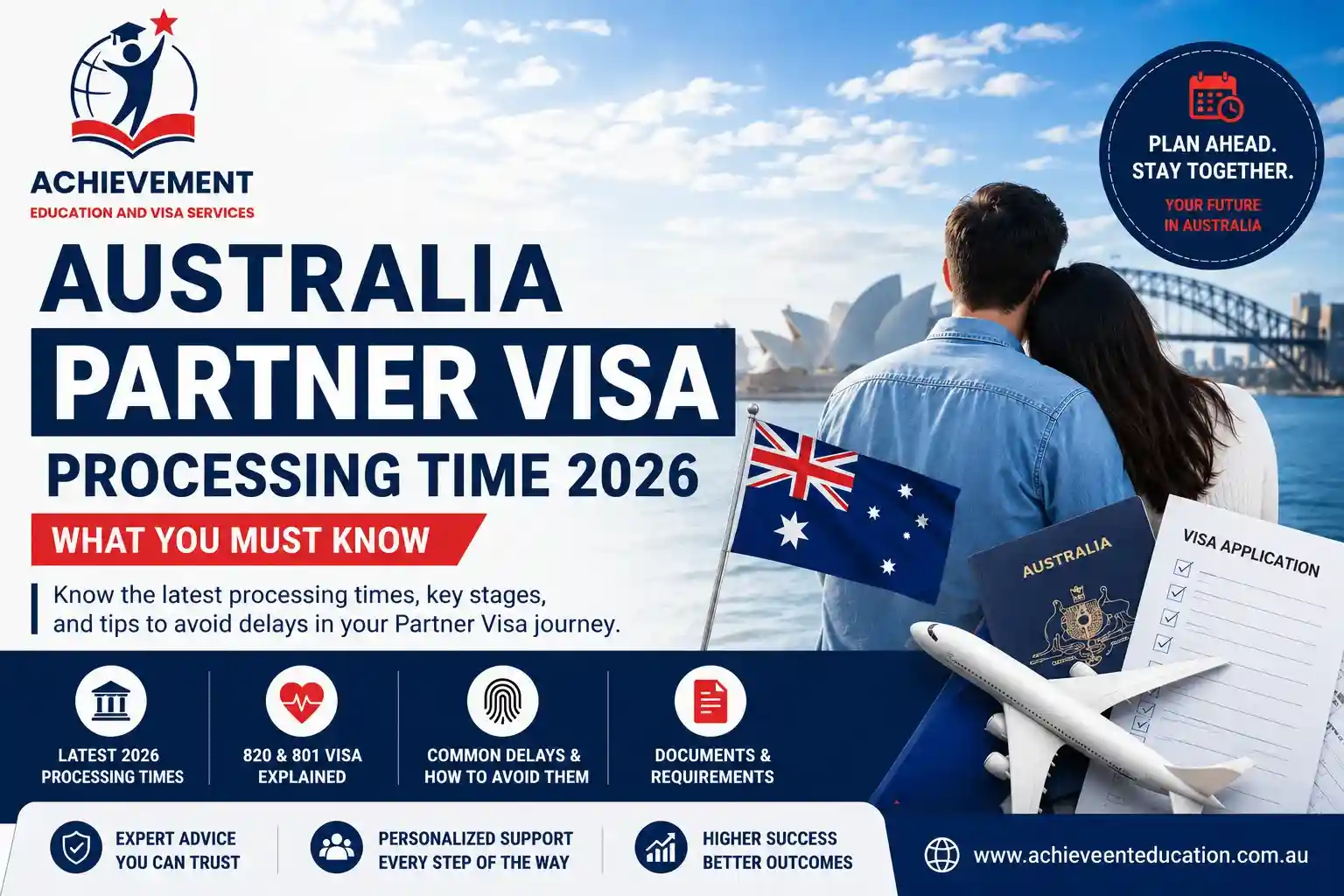
Couples may wish to apply for an Australia Partner Visa for various reasons if they wish to reside together as a couple in Australia. The process can be time consuming, though, and each application has a different wait time. The typical path to an onshore Partner Visa is through the Subclass 820 (Temporary Partner Visa) visa and then the Subclass 801 (Permanent Partner Visa). The Department of Home Affairs currently lists around 18 months as the processing time for the Partner temporary/provisional visa category. This is only an indication from the applications decided recently and does not guarantee for any particular application. Knowing the steps of the process, what might cause a delay and what you can do during the wait can help you prepare.
The citizenship application process for Partner Visa can take longer than expected, making it difficult to wait. Delays in processing may occur, and processing times may vary depending on the requirement of additional documents, information and/or checks. Knowing the steps involved in the process and applying it well can help prevent common delays and manage the application process.
How Long Does an Australia Partner Visa Take in 2026?
In 2026, some Partner Visa applications may take longer than others to process. It depends on your application and how busy the Department of Home Affairs is. Currently the Department has 18 months in place for the Partner provisional/temporary visa classification. Processing times may vary due to the number of new and existing applications that are currently being processed. Typically, for an onshore Partner Visa you will apply for the Subclass 820 visa and the Subclass 801 visa simultaneously. The 820 is a temporary stage, the 801 is a permanent stage.
The key point is that the permanent stage does not typically start 2 years after grant of your 820 visa. You can normally apply for the subclass 801 visa 2 years after your initial application for your temporary visa and permanent visa. The time required for processing your individual application may be longer or shorter than the information provided above. Applications that are not complete, may need further information, or further verification can take a longer time.
Understanding the 820 and 801 Visa Process

In general, there are two stages for the Australian onshore Partner Visa process: Subclass 820 (Temporary Partner Visa) and Subclass 801 (Permanent Partner Visa). Both visas are typically sought through a single visa application, but are processed independently.
The first visa is 820 and second is 801. Knowing how these two stages operate, can help you be better prepared for what to expect once you have applied for a Partner Visa and when you might be able to move towards permanent residence.
1. Subclass 820 – Temporary Partner Visa
A temporary Partner Visa (subclass 820) is a visa for eligible spouses or de facto partners of Australian citizens, Australian permanent residents or eligible New Zealand citizens. It's inaugurated for candidates who apply in Australia and while the visa is issued. The 820 visa is awarded to those who are granted temporary work visa, while their Partner Visa application is being processed in Australia, thus allowing them to stay in the country temporarily. It is usually the initial step in the onshore Partner Visa subclass 190 visa pathway and can be the basis for applying for the long-term subclass 801 visa.
Currently, the processing time for the Partner Visa (temporary/provisional) category is approximately 18 months, as published by the Department of Home Affairs. This is a rough timeline only, and does not guarantee that all applications will be determined within this period. The times given for some applications may be longer depending on the circumstances of the applicant, the documents submitted and the additional information and/or checks being required by the Department. When applying, complete and accurate documents can help to prevent the delay of your application. Any requests by the Department should also be answered in time as well.
2. Subclass 801 – Permanent Partner Visa
The permanent phase of the onshore Partner visa program is the subclass 801 visa. It lets an eligible partner to become a permanent resident in Australia, if he/she receives it. Most of the time, the temporary Partner Visa must have been held for two years and the visa must have been the combined 820 and 801 visa application for an Australian Partner from overseas before an assessment for the permanent stage can occur. During the permanent stage, the department will determine if your relationship with your sponsor is still compliant with the appropriate requirements. This may require you to supply new information or records demonstrating the continuity of your relationship.
In addition, there are some situations in which you might be eligible for a permanent visa before a two-year waiting period. For example, this would come into effect if, when you applied for the Partner Visa, you already had a prolonged relationship with your sponsor. Other special conditions may also be in effect. Early consideration for the subclass 801 visa is, however, not automatic. Applicability is subject to your case and the condition in which you must comply with your application.
What Can Affect Partner Visa Processing Time?
Australia Partner Visa Processing Time can be influenced by a variety of factors.There are several factors that could impact upon the processing time of the Australia Partner Visa.
Australian Partner Visa processing time may differ from case to case. General processing times are given by the Department of Home Affairs. But these are only estimates and cannot guarantee when your application will be decided. However they may be longer depending on the quality of the application, evidence submitted, checks in the application, and if the Department requires additional information.
1. Complete and Accurate Application
To avoid delaying application, applicants are advised to submit a full and accurate application. Ensure that all the forms are filled out properly and submit the proper documents needed for an application.
Processing may take longer if documents are missing, the application is incomplete or unclear, additional information or forms need to be reviewed, or any documents contain incorrect information.
2. Relationship Evidence
History of relationships is crucial in an application for a Partner Visa. Documents and other evidence will need to be submitted establishing that your relationship is true and fulfills the specific visa requirements.
Your evidence could contain details about your financial plans, household duties, social lives and care for one another. It is useful to present clear, consistent and organized evidence to aid the Department's understanding of your relationship and evaluation of your submission.
3. Health and Character Checks
Applications may also be processed longer as a result of the required health examinations and character checks. The Department may require further investigations or investigation, in some instances, before it can reach a conclusion.
As needed, scheduling of your police checks and health screenings before the application process will help prevent delay later in the application process. Take care to ensure that these checks are done when and how they are instructed by the Department to be done.
4. Requests for More Information
The Department may contact you if it needs more documents, information or clarification before making a decision. It is recommended that you routinely review your **ImmiAccount** and reply to any requests within the time period.
Please note that it can take between an hour and a month to process an application, depending of the amount of information that has to be submitted. The earlier that the information can be provided the better for the Department to be able to process your application without delay.
Why Does the Partner Visa Take So Long?

Partner visas often take longer to process than other visa classes as the Department will have to consider a number of aspects to the application. Not just verifying ID documents. The Department must also consider if the applicant is entitled to a visa, if the relationship falls within the requirements and if health, character and other requirements were met.
There are also numerous applications made to the department. Processing times may vary while it is processing new and older applications that have been published. Another reason is that some applications are more complex than others. The assessment might take longer if there will be a need to verify the information or other documents. Therefore, the published processing time should be regarded as a guideline only and not as a visa determination date.
How to Avoid Delays in Your Partner Visa Application
While you cannot speed up the processing time of your application by the Department of Home Affairs, you can take steps to prevent delays in your application due to missing documents or information. A thorough application will give the Department the information it needs to make a decision on your application, and will reduce back and forth with the applicant.
These are some simple tips about how to minimize delays:
- Ensure that you provide a comprehensive application before you lodge the application to ensure that all the documents and forms and supporting evidence are provided.
- Enter clear and relevant evidence to support your relationship and the information in your application.
- Review your information, ensuring that names, dates, addresses and other content details are consistent and accurate throughout everything.
- Provide additional documents or information when requested promptly by the Department.
- At the permanent visa stage there may be a requirement to submit additional evidence of the ongoing relationship.
Doing these steps cannot guarantee to get a Partner Visa quicker, as there are many factors affecting the processing time. To help ensure your application gets to the Government on time, without delay and with accurate information and appropriate evidence to support it.
Conclusion
Australia Partner Visa application process can take some time, especially if you are using the onshore visa route. The visa application process is divided into two stages which are Subclass 820 temporary Partners Visa and Subclass 801 permanent Partner Visa. According to Home Affairs Department statistics in May 2026, the Median processing time for Partner temporary/provisional visa was 20 months. This is a general guide only, the time may vary with the use of any particular application. Submission of all relevant paperwork, supporting evidence for relationships and prompt reaction to the Department's requests may help to prevent unnecessary delays.
Looking for visa assistance or migration to Australia then Achievement Education & Visa Services, the best student visa and migration consultants in Sydney, can provide you with guidance through the process and preparation of the necessary paperwork. Personalised Visa & Migration Advice according to your situation and objectives to make visa application clearer and easier to handle. You can find more information about our services at Achievement Education & Visa Services.
Recommended Blogs:
- Student Visa Processing Times in Australia 2026: What to Expect
- OSHC Australia 2026: Best Health Insurance Providers Compared for International Students
Frequently Asked Questions About Partner Visa Processing Time
1. How long does a Partner Visa take in Australia in 2026?
The Department of Home Affairs has currently 18 months set, for the Partner Provisional/temporary visa subclass. This is a general guide only, based on final decisions on recently submitted applications and is not a guarantee for the time required for a particular application.
2. How long does Subclass 820 take?
Partner visa (subclass 820) visas are part of the Partner temporary/provisional visa processing category. Currently the Department indicates they can take approximately 18 months to process applications, but the timeframe may vary based on application, documents submitted, need for additional information and on the workload of the Department.
3. How long after 820 can I get Subclass 801?
Typically, you will qualify for the subclass 801 visa application two years after you first applied for the temporary Partner visa & permanent Partner visa. Normally, the two-year period will be from the date your initial application for class 190 visa is made, and not from the visa being granted.
4. Can I speed up my Partner Visa application?
Unfortunately, there is no general process for an Applicant to make a Partner Visa application a fast-track. A full application, with all necessary evidence and in a timely fashion, however, can reduce the amount of unnecessary delays in the process. The Department also has a priority process for what occurs in limited circumstances and inclusion requirements exist.
5. Can missing documents delay my Partner Visa?
Yes. If documents are missing, it could mean late processing of your application, as the Department may need to send requests for additional information or to confirm details. Additional information may require additional time to obtain, and if documents are missing, an application may take a longer time, the Department states.