Australia offers temporary employer-sponsored work visas, which one can then use to transition into Australian PR. The Subclass 482 Skills in Demand visa is a temporary visa that permits skilled overseas workers to reside and work in Australia, while the Subclass 186 Employer Nomination Scheme visa is the visa for which there is an opportunity to get a pathway to Australian citizenship. If you have a Subclass 482 Skills in Demand visa, and you want to apply for a Subclass 186 Employer Nomination Scheme visa, you need to understand that there is an opportunity to make this transition provided that you have met all the requirements.
In this blog, we provide insight into how you can transition from 482 to 186 visa. The information will include aspects such as 182 to 186 visa transition pathways, 482 to 186 visa eligibility and process of transition.
Understanding 482 and 186 Visas in Australia

Under the employer-sponsored visa program of Australia, eligible overseas workers can be employed in positions where there is not enough local labour force. There are two important visas under this program; Subclass 482 Skills in Demand visa and Subclass 186 Employer Nomination Scheme visa.
What Is the Subclass 482 Skills in Demand Visa?
Subclass 482 Skills in Demand visa is meant to assist Australian employers in sponsoring skilled foreign workers whenever they are unable to locate suitably qualified Australian workers for a particular job. It provides the applicants with temporary right of residence and employment in Australia within their nominated occupation for the approved sponsoring employer.
This visa normally provides the applicants with the right to stay for up to four years, depending on the type of stream and other prevailing circumstances. An applicant needs to have a suitable employer sponsor, suitable skill sets and experience and must satisfy the English language and work experience criteria. In addition, the employer needs to fulfill the nomination and sponsorship criteria before the application process by the worker.
There are mainly three types of streams available for Subclass 482 Skills in Demand visa:
- Core Skills Stream: This is meant for skilled workers having occupations from Core Skills Occupation List (CSOL) meeting the appropriate salary criteria.
- Specialist Skills Stream: This is meant for highly paid skilled workers meeting the relevant salary and skills criteria, in eligible occupation categories.
- Labour Agreement Stream: This is meant for workers nominated under Labour Agreement with the Australian Government.
What Is the Subclass 186 Employer Nomination Scheme Visa?
The Subclass 186 Employer Nomination Scheme visa is for overseas skilled employees wishing to immigrate to Australia permanently through employer sponsorship. Different from the temporary Subclass 482 visa, this visa offers permanent residency status, and once the applicant is successful, he/she will be able to work for any employer in Australia and not necessarily be restricted to the sponsoring employer. Permanent residents may also benefit from Medicare services, sponsor their families and even become Australian citizens when the eligibility conditions are met.
For this visa, applicants must typically be nominated by a sponsoring Australian employer for an authentic job offer, meet the required work experience and skills conditions, and fulfill the age, English, health and character conditions. Requirements and exemptions are dependent on the chosen stream.
There are three streams of the Subclass 186 visa, namely:
- Temporary Residence Transition (TRT) Stream: For eligible temporary skilled visa holders who have been working for their sponsoring employer for the required time and receive nomination for permanent residency.
- Direct Entry Stream: For skilled workers who qualify in relation to their occupation, employment, and skills assessment. There is no need for applicants to have held the 482 visa prior to application.
- Labour Agreement Stream: For skilled workers sponsored by employers under an approved labour agreement providing a path to permanent residency.
The two streams provide alternative routes to Australian permanent residency based on the applicant’s employment background and qualifications.
482 to 186 Visa Transition Pathways
A holder of the Temporary Subclass 482 visa may apply for permanent residency of Australia by way of any of the streams of the Subclass 186 Employer Nomination Scheme visa program. These include the Temporary Residence Transition (TRT) stream, the Direct Entry stream and the Labour Agreement stream.
Temporary Residence Transition (TRT) Stream
The Temporary Residence Transition (TRT) stream is a common pathway for current and former Subclass 482 visa holders seeking permanent residency through their Australian employer. It allows eligible skilled workers to transition from temporary employer-sponsored employment to permanent residency without generally requiring a separate skills assessment.
Applicants must usually meet the following requirements:
- Eligible visa status: The applicant should possess either a subclass 482 visa, a subclass 457 visa or an eligible bridging visa based on a relevant application.
- Two-year work experience: The applicant is supposed to have completed a minimum of two years of relevant and full-time sponsored employment in Australia during the three years prior to the application. The applicant’s employment should satisfy the requirements of the Department of Home Affairs.
- Employer sponsorship: The applicant is required to obtain a nomination from an eligible employer in Australia. Typically, this should be the sponsor who nominated the applicant for the relevant temporary work visa.
- Age requirement: The applicant is usually below the age of 45 years old unless the applicant qualifies for any exemption from the age requirement.
- Language requirement: The applicant is supposed to have at least competent English unless an exemption or concession is available.
The TRT stream also enables eligible applicants to apply for the eligible employment sponsored by their previous employers toward the two-year work experience requirement.
Direct Entry Stream
The Direct Entry stream is another option available to those skilled workers who do not satisfy the criteria of the TRT stream or have failed to complete the required period of employment through sponsorship. Applicants may not necessarily require a Subclass 482 visa prior to lodging their application. Nonetheless, applicants must fulfill certain occupation, skills, experience, and nomination criteria.
Some of the primary eligibility criteria are as follows:
- Eligible occupation: The applicant should be nominated by the employer in any of the occupations appearing on the relevant CSOL (Core Skills Occupation List).
- Skills assessment: It is important for applicants to receive a positive skills assessment from the relevant assessing authority prior to lodging the visa application, except when they are exempted.
- Experience in related field: Normally, it is expected that the applicants have at least three years' experience in their nominated field, but this requirement does not apply to the exempted applicants.
- Employer nomination: The nomination of the applicant should come from an Australian employer in a genuine occupation, which is supposed to remain open for a period of at least two years.
- Age and English criteria: Applicants should be below the age of 45 and hold at least Competent English level, but exceptions do apply.
Unlike the TRT stream, the Direct Entry stream focuses on the qualifications, skills, and experience of the applicant instead of sponsoring employers.
Labour Agreement Stream
Skilled worker visa applicants who have been nominated through an approved labour agreement between the employers and the Australian government qualify for the Labour Agreement stream. According to this agreement, the employers can sponsor workers in occupations that require a unique approach to be followed in order to meet any workforce shortages.
If the employer's labour agreement has a provision for a permanent residency pathway, the applicants can transfer their Subclass 482 visas to Subclass 186 visas.
Conditions may include:
- Employer holding approved labor agreement: The applicant must have an Australian employer who holds an approved labor agreement and is willing to sponsor under the Subclass 186 visa.
- Occupations: The occupation needs to be listed in the approved labour agreement of the employer and needs to satisfy the terms of the agreement.
- Work experience: The applicants need to satisfy the work experience requirement of the agreement.
- Age and English Language Qualifications: All the relevant age qualifications must be met by the applicant, and the least relevant age must be less than 45 years, as well as all English language qualifications.
- Other Qualifications: The applicant must also satisfy other relevant skill and qualification requirements, as well as other relevant health and character requirements, and any other relevant occupation qualifications.
One benefit of using this stream of the visa is that concessions may be available regarding some of the standard visa criteria, such as age, English language requirements, and work experience. But these concessions are available on the basis of an individual agreement.
Eligibility Criteria for Transfer from 482 Visa to 186 Visa

Transfer from Subclass 482 Skills in Demand visa to Subclass 186 Employer Nomination Scheme visa means meeting some immigration, employment, and employer nomination criteria for the applicant. Though the requirements for the 186 visa vary according to the selected stream of the visa, the general requirement is work experience along with the employer nomination and other relevant criteria in Australia.
The following are the eligibility criteria that have to be met for the 482 to 186 visa transition:
- Eligibility under 482 and bridging visas: Applicants must be holders of an eligible 482, 457 or a bridging visa associated with their substantive visa.
- Satisfying the work experience criteria: TRT applicants require two years of full-time eligible employment sponsored within the last three years.
- Eligible employer nomination: Applicants must be nominated by an eligible Australian employer for an actual position.
- Age criteria or exemptions to be met: Applicants should generally be below 45 years of age except for exemptions available due to occupation or employment.
- English language criteria: Applicants have to satisfy the Competent English criteria or meet any exception that applies.
- Health and character criteria: Applicants have to satisfy health and character criteria through the completion of medical tests and police checks wherever applicable.
Step-by-Step Process to Transition from a 482 to 186 Visa
Transitioning from the Subclass 482 Skills in Demand visa to the Subclass 186 Employer Nomination Scheme visa includes a number of processes, such as verifying one's eligibility, making sure one qualifies for the visa and obtaining a permanent residency decision. Both the applicant and their sponsoring employer have to comply with certain obligations in order to complete the process. Though there may be slight differences in the procedure according to the selected visa stream, the general process is as follows:
1. Check Your Eligibility for the 186 Visa
You should verify whether you are eligible for the selected Subclass 186 visa. Determine your current visa, employment experience, qualifications, age and proficiency in English language. In addition, find out which stream fits you;Temporary Residence Transition, Direct Entry or Labour Agreement.
2. Verify Your Employer's Willingness and Eligibility to Nominate You
The employer's willingness to nominate you plays a critical role when it comes to switching from 482 to 186 visas. First of all, consult your employer about the plans for permanent residency and make sure they will be willing to nominate you. The employer will have to meet all the relevant standards and offer a real job.
3. Gather the required paperwork
You need to collect all the documents that will be of use to you for your visa application process. This may include your passport, visa details from the past, employment contracts, payslips, experience letters, results of English language tests, and many other things. If you include your family in your visa application, you may need to provide papers.
4. Submit Nomination Application to your employer
Once the nomination has been approved by the employer, they must lodge a Subclass 186 nomination application with the Department of Home Affairs. The employer must provide information about the position being nominated, remuneration, business operations and employment agreements. The nominee has to meet the requirements of the specified visa stream.
5. Your Visa Application for 186
Once your nomination process has begun, you can submit your Subclass 186 visa application online using the Department of Home Affairs ImmiAccount. You should enter all your personal details accurately, attach any required supporting documents and pay the relevant visa application fee. You should also ensure your application meets the required lodgment standards.
6. Meet Additional Health, Character or Document Requirements
After you submit your application, the Department of Home Affairs may ask you to provide further information or documentation in support of your application. You and your associated family members may be required to undergo medical examinations, produce police clearance certificates or other evidence of employment, qualifications and other qualifying requirements. Proper time frame for answering these requests eliminates unnecessary processing delays.
7. Waiting for Visa Decision
Once the necessary assessments are completed, the Department of Home Affairs will assess your Subclass 186 visa application. You can check the status of your application on ImmiAccount and reply to requests from us during processing. If successful, you and any eligible family members included in the application will be granted Australian permanent residency subject to restrictions of the visa grant.
Note: Employer nomination and visa applications are independent processes. Meeting the visa requirements does not mean automatic approval, as both the nomination and the visa application have to meet the relevant immigration standards.
Documents Required for a 482 to 186 Visa Application
Preparing the correct documents is an important part of transitioning from a Subclass 482 Skills in Demand visa to a Subclass 186 Employer Nomination Scheme visa. Applicants must provide supporting documents to prove identification, visa history, employment history, qualifications and eligibility for residence. The specific papers needed will be different depending on the 186 visa stream selected and the situation of the person applying.
The standard documents needed for a 482 to 186 application are listed below.
- Identity and passport papers: Provide a passport, a birth certificate, an identity card and other identity documents for family members.
- Visa details from the present and past: Include the documents pertaining to the approval of a 482 visa as well as supporting documents and the records of the previously held visas if required.
- Work: Provide proof of employment, including contracts of employment, payslips and IRS records of the particular job for which the employee has been sponsored.
- Work Experience: Provide reference letters from past employers, work experience certificates, job description, and all necessary documents which prove your work experience.
- English Language Proficiency: Provide evidence of your English language proficiency that has been taken from an authorized English language test.
- Skills assessment (if required): If not exempt, provide a skills assessment for the chosen job.
- Details of employer nomination: Provide information about the employer, the position being nominated, work conditions and nomination application details.
- Health and Police Clearance Papers: Provide the required checks. Give police certificates from countries where the person lived.
Applicants need to make sure all papers are correct, up to date and match the information given in the visa application. Documents not in English must be accompanied by a translation. Incomplete or contradictory information may lead to document requests and delays in visa processing.
How long does it take to switch from 482 visa to 186 visa?
The time taken to transition from 482 to 186 visa varies depending on eligibility, employer nomination and visa processing criteria. TRT applicants normally must complete two years of sponsored employment prior to applying. However, there is additional processing time for the nomination and application for permanent residency. Thus, the entire period of transition may be longer than the minimum period of work. Factors affecting the length of the visa transition period include:
1. Minimum Time Worked Before Applying
Applicants coming through the Temporary Residence Transition (TRT) stream normally need to have at least two years of qualified sponsored employment in Australia in the three years immediately prior to applying. You must meet this condition before you submit the visa application.
2. Employer Nomination Processing
Before an applicant can receive a Subclass 186 visa, the applicant’s employer must submit a nomination application to the Department of Home Affairs. The processing time depends on the employer’s eligibility, the business documentation, the nominated position and the Department’s assessment requirements. Delays may occur if additional information or supporting evidence is requested.
3. 186 Visa Application Processing
After lodging the Subclass 186 visa application, the applicant must wait for the Department of Home Affairs to assess the applicant’s eligibility and supporting documents. Labour Agreement stream applications have processing times with 50 percent finalised within 44 days and 90 percent within 13 months. That said, this does not guarantee an application outcome.
Several factors can influence how long the 482 to 186 visa transition takes, including:
- Application: Lack of supporting documents or wrong information in the application can lead to requests and delays.
- Employer nomination problems: Delays in employer checking their eligibility, business operations and nominated position can be used.
- Medical and character tests: Additional medical examinations, police checks or background checks may also prolong the processing times.
- Application difficulty: A challenging employment record, job-hopping, and ambiguities regarding employment may lead to prolonged processing times.
- Amount of applications: The number of applications that come in and Department’s priorities may determine the time taken to process them.
- Response to requests: Slow responses to requests for further information may also slow down the processing of applications.
It is necessary to prepare all the relevant documentation and reply quickly to the inquiries from the Home Affairs Department in order to prevent unnecessary delays.
Costs for 482 and 186 Visas in Australia (2026)

Transferring from Subclass 482 Skills in Demand visa to Subclass 186 Employer Nomination Scheme visa involves several expenses for the application and the sponsoring employer. Total costs depend on application fees, employer nomination fees, and Skilling Australians Fund (SAF) levy, as well as other costs like medical checks, police checks and skills assessments. The applicant should understand which expenses the applicant is responsible for and which costs must be covered by the sponsoring employer before beginning the application process.
Subclass 186 Visa Application Fees
The Subclass 186 visa application charge is paid by the applicant when lodging the permanent residency application. As of November 2026, the standard base application charge starts at AUD 6,140 for the main applicant. The base charge is the same for the TRT, Direct Entry and Labour Agreement streams. Applicants must plan for fees if Applicants add family members to their applications.
Employer Nomination and Sponsorship-Related Costs
The sponsoring employer must pay the nomination fee. The SAF charges apply when nominating a worker for permanent residency. Employer nomination fee is AUD 540 for a Subclass 186 nomination, depending on the stream and location. Skilling Australians Fund (SAF) levy is AUD 3,000 for businesses with a turnover below AUD 10 million and AUD 5,000 for businesses with a turnover of AUD 10 million or more. The SAF levy is a one‑time payment for the Subclass 186 nomination. Employers are legally required to pay the nomination fee and the SAF levy. Employers cannot shift these costs to the visa applicant or to the applicant's family members.
Skills Assessment Fees (If Applicable)
Applicants who apply through the Direct Entry stream usually need a positive skills assessment from the assessing authority unless Applicants qualify for an exemption. The assessment fee changes with the nominated occupation, the assessing authority and the type of assessment that is required. Applicants should visit the assessing authority's website to see the fees before Applicants submit their applications.
Health Examinations and Police Clearance Costs
Applicants and any family members included in the application may have to complete examinations and provide police clearance certificates to meet Australia's health and character requirements. These costs are separate from the visa application charge. Vary with the country, the medical provider and the number of people who need them.
Applicants may also incur additional expenses for biometrics, document certification, and English translations where required.
Additional Applicant Charges
If applicants include eligible family members in their Subclass 186 visa application, additional visa charges apply. The amount depends on the age of each applicant and their relationship to the primary applicant. Family members aged 18 or above who do not have Functional English may also be required to pay a second instalment of AUD 4,890 before the visa is granted.
The Department of Home Affairs calculates the mentioned charges depending on the details provided in the application. Applicants can use the official Visa Pricing Estimator to check the applicable fees.
Latest Updates Affecting the 482 to 186 TRT Pathway
Recent regulatory updates have changed how work experience is assessed for the Temporary Residency Transition Stream (Subclass 186). Starting in late 2025, only employment completed under an approved sponsor is counted towards the two-year work requirement. This change means that the employer must maintain approved sponsorship status throughout the relevant work period. If the sponsorship expires or the applicant changes employers, some of the work experience may not count. Therefore, it is now important to maintain valid sponsorship throughout the period and check whether the employment meets the visa requirements.
Common Challenges When Transitioning from a 482 to 186 Visa
The Subclass 482 Skills in Demand visa offers a route to residency through the Subclass 186 Employer Nomination Scheme visa. However, the transition can bring challenges. The Subclass 482 applicant must satisfy employment, employer sponsorship and immigration requirements. Even small problems with eligibility or documents can delay the process. Affect the Subclass 186 outcome.
- The employer may refuse to nominate the employee for residency.
- In case the Subclass 482 applicant has not completed the necessary employment duration.
- The Subclass 482 applicant can fail to meet the English requirements or age requirements.
- A change in job or employer can affect eligibility for the Subclass 482.
- Delays may occur in the process of application due to missing documents or incomplete documents.
- The Subclass 482 visa can expire before the Subclass 186 application process is completed.
Conclusion
The Subclass 482 Skills in Demand visa gives workers a chance to live and work in Australia for a limited time through employer sponsorship. The Subclass 186 Employer Nomination Scheme visa, on the other hand, offers a route to residency for skilled workers who meet the criteria. Moving from a Subclass 482 to a Subclass 186 visa means meeting the employment, employer nomination and immigration requirements. Knowing the pathway's eligibility rules, application steps, and related costs can help the Subclass 482 applicants prepare for a transition. Yet immigration rules in Australia may change. The Subclass 482 applicant should always verify the guidelines before applying.
At Achievement Education and Visa Services, one of the best Student Visa & Migration Consultants in Sydney, the team can help the Subclass 482 applicant understand the 482 to 186 transition and guide the applicant through the steps. Contact Achievement. Visa Services today to discuss permanent residency options with an experienced Nepali migration consultant in Australia.
Read More :
What is the difference between 482 visa and 186 Visa
Subclass 190 Visa Australia: State Nomination and PR Pathway
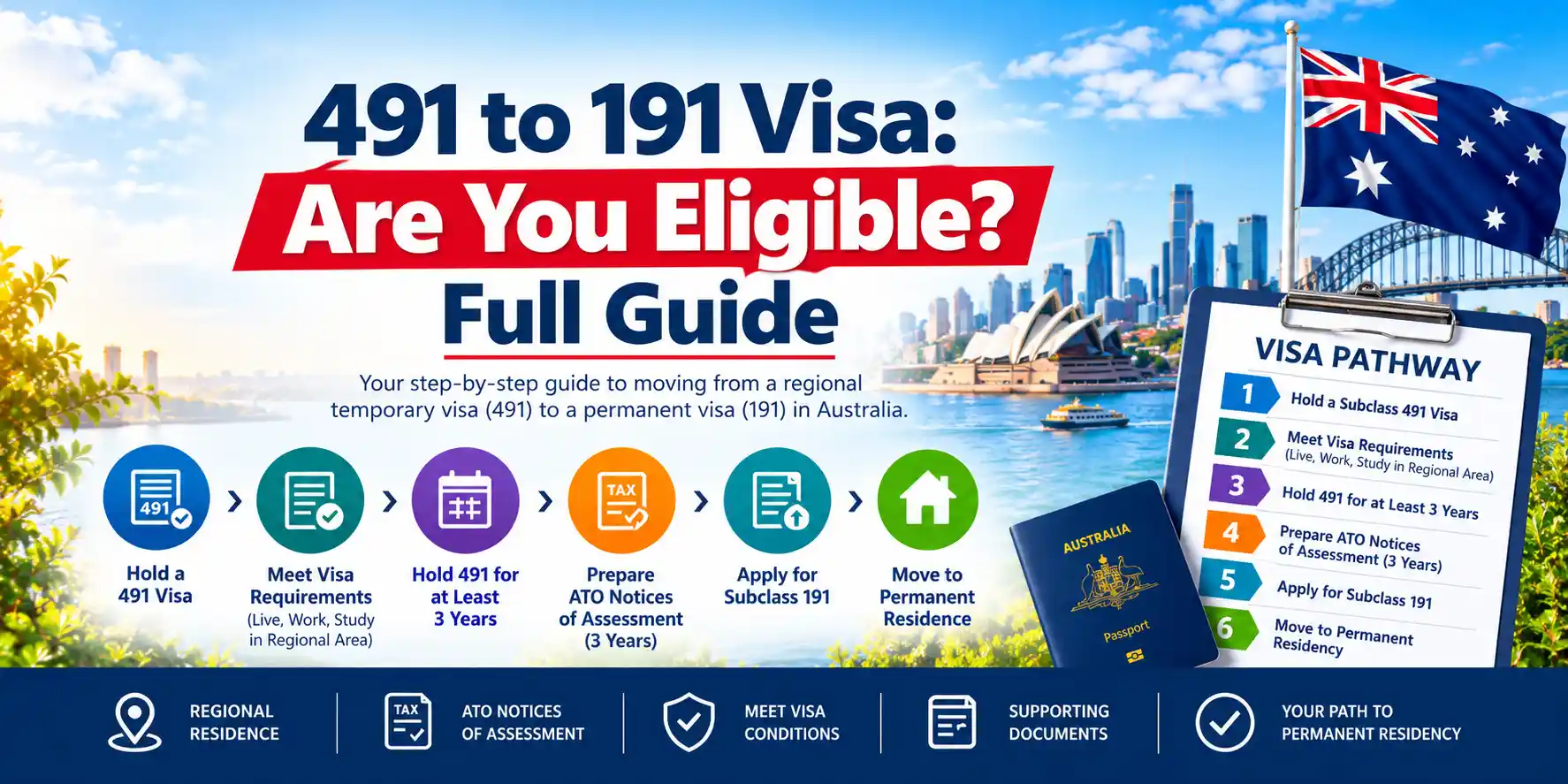
491 to 191 Visa: Are You Eligible? Full Guide
FAQs On Transitioning from Temporary Work to Australian PR (2026)
1. Do 482 visa holders have the option to directly submit a request for a 186 visa?
Yes, all 482 visa holders who meet the required work period may submit a 186 visa request through the TRT pathway. If applicants qualify according to other requirements, they may have the chance to apply in different ways.
2. Is it possible for me to apply for a 186 visa if I’m older than 45?
Typically, applicants apply under 45 years of age. Nevertheless, there are exceptions in some cases depending on the occupation or other situation.
3. How long do I need to work while on a 482 visa before applying for a 186 visa?
Most TRT applicants are able to apply only after gaining at least two years of employment experience in Australia within the three years prior to the application.