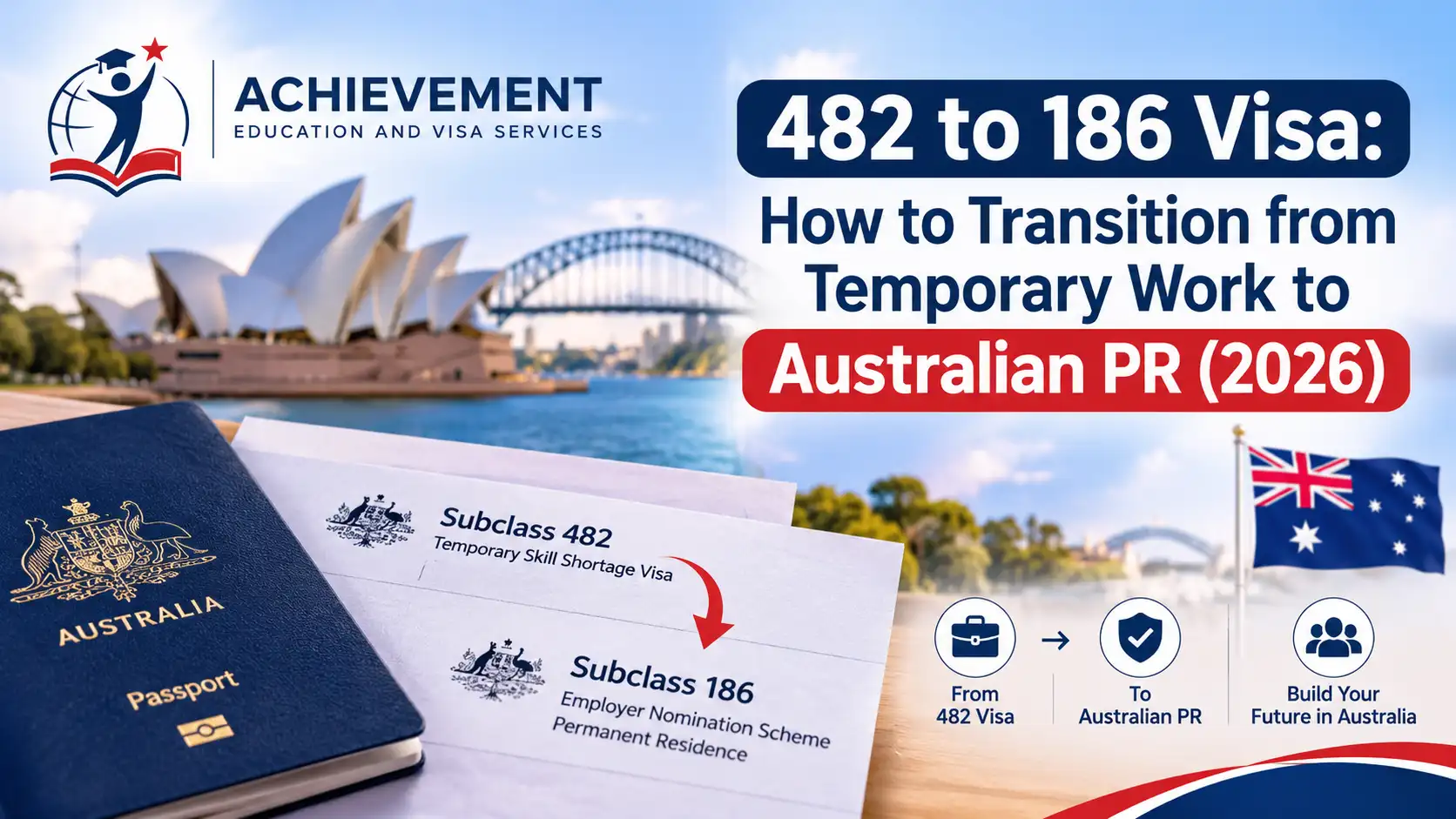
Australia is a nation which is widely coveted by many Nepalese, and it offers many employer-sponsored visa options for skilled overseas workers, including those from Nepal. Among these, the Subclass 482 visa (Skills in Demand visa) and the Subclass 186 visa (Employer Nomination Scheme Visa) are two of the common options. Although both of these visas require sponsorship from Australian employers, they are different in terms of visa duration, eligibility requirements, and permanent residency opportunities. While 482 visas allow skilled workers to work and live in Australia for a short duration, 186 visas allow permanent residency for eligible applicants. Thus, understanding the difference between 482 visas and 186 visas can help one understand which option is better suited to the needs of the applicants.
In this blog, we provide information about the key differences between 482 visa and 186 visa, including the differences in visa eligibility requirements.
What Is a 482 Visa in Australia?

Subclass 482 Visa, which is known as the Skills in Demand (SID) visa, is a visa program in Australia that makes it possible for companies in Australia to hire foreigners when they cannot find a suitable Australian employee. The Subclass 482 Visa assists in addressing shortages of skills in different industries and gives foreigners a chance to work in Australia.
For a 482 visa application to be successful, the individual needs to have an Australian employer who is willing to sponsor the application on his/her behalf in an eligible position. An applicant should prove that he/she possesses the required skills and experience in the nominated occupation.
There are three streams for the 482 visa:
- Specialist Skills stream: Applicable to skilled workers who earn an income above the required threshold in the particular nominated occupation.
- Core Skills stream: This stream is intended for skilled workers who are employed in occupations listed in the CSOL and earn the corresponding salary.
- Labour Agreement stream: This stream covers workers sponsored by employers covered by labour agreements with the Australian Government.
Eligible candidates can generally stay in Australia for up to four years depending on the stream they are applying for. The holders of the visa should be employed in their nominated occupations for their sponsors under applicable conditions for the visa. Generally, candidates need at least one year of work experience, pass the English proficiency test, and satisfy the health and character requirements. Some occupations and candidates might need a skills assessment.
Even though the visa is temporary, it can serve as a step towards permanent residency through the Subclass 186 visa.
What Is a 186 Visa in Australia?
The 186 Subclass Visa is an employer-sponsored visa program commonly referred to as the Employer Nomination Scheme (ENS) visa, and it allows qualified foreign workers to work permanently in Australia. This type of visa allows Australian employers to sponsor qualified workers for permanent jobs when there is a need for skilled workers.
The difference between the 482 Visa and the 186 Visa is that while the 482 Visa offers temporary employment, the 186 Visa offers permanent residency from the day it is issued. The 186 visa holders have the right to live, work, study and use Medicare if qualified.
The Subclass 186 visa has three streams:
- Temporary Residence Transition (TRT) stream: For eligible skilled workers who have worked for their sponsoring employer on a qualifying temporary skilled visa, generally for at least two years, and receive a nomination for a permanent position.
- Direct Entry stream: For skilled workers who are nominated directly by an Australian employer and meet the relevant qualifications, work experience, English language, and skills assessment requirements.
- Labour Agreement stream: For skilled workers nominated by an employer under a formal labour agreement with the Australian Government.
In most cases, one must have an employer nomination, a position that he/she qualifies for, appropriate skills and qualifications, knowledge of the English language, and at least three years of work experience to apply for a 186 visa. In addition, one must be below the age of 45; however, exceptions can apply depending on specific occupations and circumstances. One must meet the health and character requirements as well.
A 186 visa is especially ideal for skilled workers who would like to secure their future in Australia, since it offers permanent residency.
Requirements for a visa may differ in accordance with the nominated occupation and visa stream. For instance, a 186 TRT stream generally requires two years of eligible sponsored employment during three years prior to the application.
482 Visa vs 186 Visa: Key Differences

The key distinction between the Subclass 482 and 186 visa lies in the nature of residency offered by them. 482 visa enables an overseas worker to come to Australia for a temporary period to work there, whereas the 186 visa offers permanent residency based on employer nomination. Both visas have certain eligibility conditions regarding work experience, English language test results, skills, and the employers' conditions.
There are some other differences between these two visas, such as the age limit for both, visa validity, skills assessment conditions, and work conditions. The following table illustrates the distinctions between these two visas in Australia.
|
Comparison Factors |
Subclass 482 Visa |
Subclass 186 Visa |
|
Visa Type |
Temporary employer-sponsored work visa |
Permanent residency visa |
|
Full Name |
Skills in Demand (SID) Visa |
Employer Nomination Scheme (ENS) Visa |
|
Sponsorship |
Requires an approved employer sponsor and nomination |
Requires nomination by an eligible Australian employer |
|
Validity |
Up to 4 years in most cases, depending on the stream |
Permanent residency |
|
Work Experience |
Generally at least 1 year of relevant work experience |
Generally at least 3 years for Direct Entry; 2 years of eligible sponsored employment for TRT |
|
Age Requirement |
No general upper age limit |
Usually under 45 years, with certain exemptions |
|
Skills Assessment |
Required for certain occupations or applicants |
Generally required for Direct Entry, unless exempt |
|
English Proficiency |
Required, unless exempt |
Required, unless exempt |
|
Permanent Residency |
Provides a potential pathway to permanent residency through the 186 visa |
Grants permanent residency upon approval |
|
Employment Restrictions |
Generally restricted to working for the sponsoring employer or an associated entity in the nominated occupation, unless exempt |
The nominated employment is generally expected to continue for at least 2 years after visa grant |
Requirements for work experience and skills assessment vary depending on the visa category and the circumstances of the applicant. The two-year work requirement of the 186 visa's TRT stream refers to qualifying sponsored employment within the three years leading up to the application, whereas the two-year condition for the nominated role applies post-visa approval.
Eligibility Requirements: 482 vs 186 Visa
Even though Subclass 482 visa and 186 visa are targeted at skilled overseas workers sponsored by Australian employers, there are differences between the two types of visas regarding their visa eligibility requirements. Visa applications should satisfy certain requirements that relate to employer sponsorship, type of profession, work experience, English language and health and character requirements. Some of the important visa eligibility requirements are as follows:
Subclass 482 Visa Eligibility Requirements
To apply for Subclass 482 Skills in Demand visa, one needs to satisfy the following requirements:
- Employer Sponsorship and Nomination: Applicants should have an approved sponsor employer in Australia nominating them for an eligible skilled job position.
- Occupation and Skill Requirements: It is mandatory for applicants to possess the requisite qualifications, skills and experience to perform the nominated occupation. The occupation must fulfill the eligibility criteria for the chosen visa subclass.
- Work Experience: It is expected that, in most cases, applicants should have at least one year of relevant work experience in the nominated occupation or in a related occupation.
- Language Requirement: It should be ensured that applicants fulfill the required English language requirement through a language test, if you are not exempt from doing so.
- Health and Character Criteria: The candidates should meet the health and character criteria of Australia, which include certain medical and police clearance tests.
- Skills Assessment: You may require a positive skills assessment, depending on the occupation, citizenship and other factors.
Furthermore, applicants should meet the necessary salary requirements for their nominated occupation.
186 Visa Eligibility Requirements
Subclass 186 Employer Nomination Scheme visa also includes extra conditions because it allows permanent residence in Australia. Normally, applicants should have to satisfy the following eligibility criteria:
- Nominated by employer: Applicants should be nominated by an eligible Australian employer for the job that is likely to be offered to you for two years after receiving the visa.
- Eligible nominated occupation: The nominated occupation should satisfy all the criteria of the 186 visa subclass stream. For instance, Direct Entry category candidates usually need to have an eligible occupation listed in the Core Skills Occupation List (CSOL).
- Qualifications and work experience: Applicants should satisfy the qualifications and work experience required for the nominated position. Direct Entry applicants generally need at least three years of relevant work experience, while applicants under the Temporary Residence Transition (TRT) stream generally need two years of eligible sponsored employment in Australia within the three years before applying.
- Age requirement: Applicants should usually be younger than 45 years old at the time of applying for the visa. But some candidates can be age-exempt depending on their occupation.
- English language requirement: It is important that applicants demonstrate a minimum level of English proficiency, which would be Competent English, unless they are exempt from such requirement.
- Skills assessment: Applicants need to have positive skills assessment in most cases for Direct Entry unless you are exempted. Skills assessment is not necessary when applicants are applying under TRT and Labour Agreement unless the Department requires it.
- Health and character requirement: Both the applicant and their family members whose names they use for your application should satisfy the relevant health and character requirements.
Depending on the stream in which you choose to apply for the visa, different eligibility requirements will apply. Fulfillment of the basic requirements does not necessarily mean that the application will be approved.
Can You Switch from a 482 Visa to a 186 Visa?
Yes, skilled overseas employees on the Subclass 482 visa can switch from 482 visa to 186 visa. This is done via the subclass 186 visa, provided they fulfill the necessary qualifications. This allows eligible temporary visa holders to continue their employment in Australia while obtaining permanent residency through employer nomination. There are two main pathways through which eligible candidates holding 482 visas can apply for 186 visas. They are:
Temporary Residence Transition (TRT) Stream
The Temporary Residence Transition (TRT) stream is a common pathway for 482 visa holders who want to obtain permanent residency through their current employer. In order to be considered, applicants must satisfy the following criteria:
- Possess a Subclass 482 visa or a suitable bridging visa relating to a relevant application.
- Complete at least two years of full-time eligible sponsored employment in Australia within the three years before applying.
- Receive a nomination from an eligible Australian employer for a permanent position.
- Meet the applicable English language, health, and character requirements.
- Generally be under 45 years of age unless an exemption applies.
- The employer must generally be the applicant's most recent sponsor of their eligible temporary skilled employment. The employer must also nominate the applicant for a genuine position and receive approval for the nomination. The visa application must generally be lodged within six months of the nomination approval.
Direct Entry Stream
The other alternative is the Direct Entry subclass 186 visa. In contrast with the TRT stream, individuals applying through the Direct Entry stream are not necessarily required to have a 482 visa or to have worked in Australia on a sponsorship for two years.
This stream could be a useful choice for qualified professionals having all the necessary qualifications and experience, along with an Australian sponsor willing to nominate them as permanent residents. The criteria that apply for this stream are as follows:
- Nominations from an eligible Australian employer.
- Relevant work experience of at least three years.
- A positive skills assessment for their nominated occupation, unless exempt.
- Competent English language proficiency.
- To be under 45 years of age, unless an exemption applies.
- To meet the applicable health and character requirements.
- Useful for skilled workers meeting the permanent residency criteria but who haven't yet met the qualifying employment requirement through the TRT stream, the Direct Entry stream can help them achieve their goals.
Does Holding a 482 Visa Guarantee a 186 Visa?

One should note that holding a subclass 482 visa doesn’t imply automatic acquisition of the 186 visa. An applicant should have all requirements for the chosen stream of 186 visas met independently, namely, nomination by an employer, experience, age, English language proficiency, and assessment of skills where relevant. One should also note that the fact of a company’s readiness to sponsor an employee on a temporary basis doesn’t imply its permanent sponsorship intentions.
Which Visa Should You Choose: 482 or 186?
The choice for choosing subclass 482 or 186 visa is determined by your qualifications, work experience, chances of being sponsored by your employer, and long-term goals in Australia. Both the visas enable skilled individuals from other countries to be employed by Australian employers. Nonetheless, the visas fulfill various functions.
Among the several reasons why you should opt for 482 visa are:
- Your Australian employer has expressed interest in nominating you for a temporary position.
- You satisfy the eligibility criteria such as occupation, work experience, English language, among others, for a specific 482 stream.
- You want to acquire work experience in Australia in preparation for permanent residence in the country.
- You are not yet qualified for a 186 visa but can qualify at a later stage through Temporary Residence Transition stream.
- You are interested in temporary employment while seeking long-term employment and settlement in Australia.
At the same time, you should go for 186 visa when:
Your Australian employer is willing to nominate you for a permanent position.
- You meet the requirements of age, English language proficiency, qualifications, and work experience.
- You may become eligible for any one of the 186 visa subclasses, for example, Direct Entry, Temporary Residence Transition, and Labour Agreement.
- For those who choose the Direct Entry subclass, it means that they intend to become a permanent resident of Australia without having resided and worked under employer-sponsored visas.
- You would like to settle in Australia permanently, to reside and work there forever.
- Your decision depends on your personal situation.
- If you qualify for 186 visas, this is a direct way to obtain permanent residency. On the other hand, if you are required to get some relevant work experience in Australia, a 482 visa may be a good starting point.
Read More :
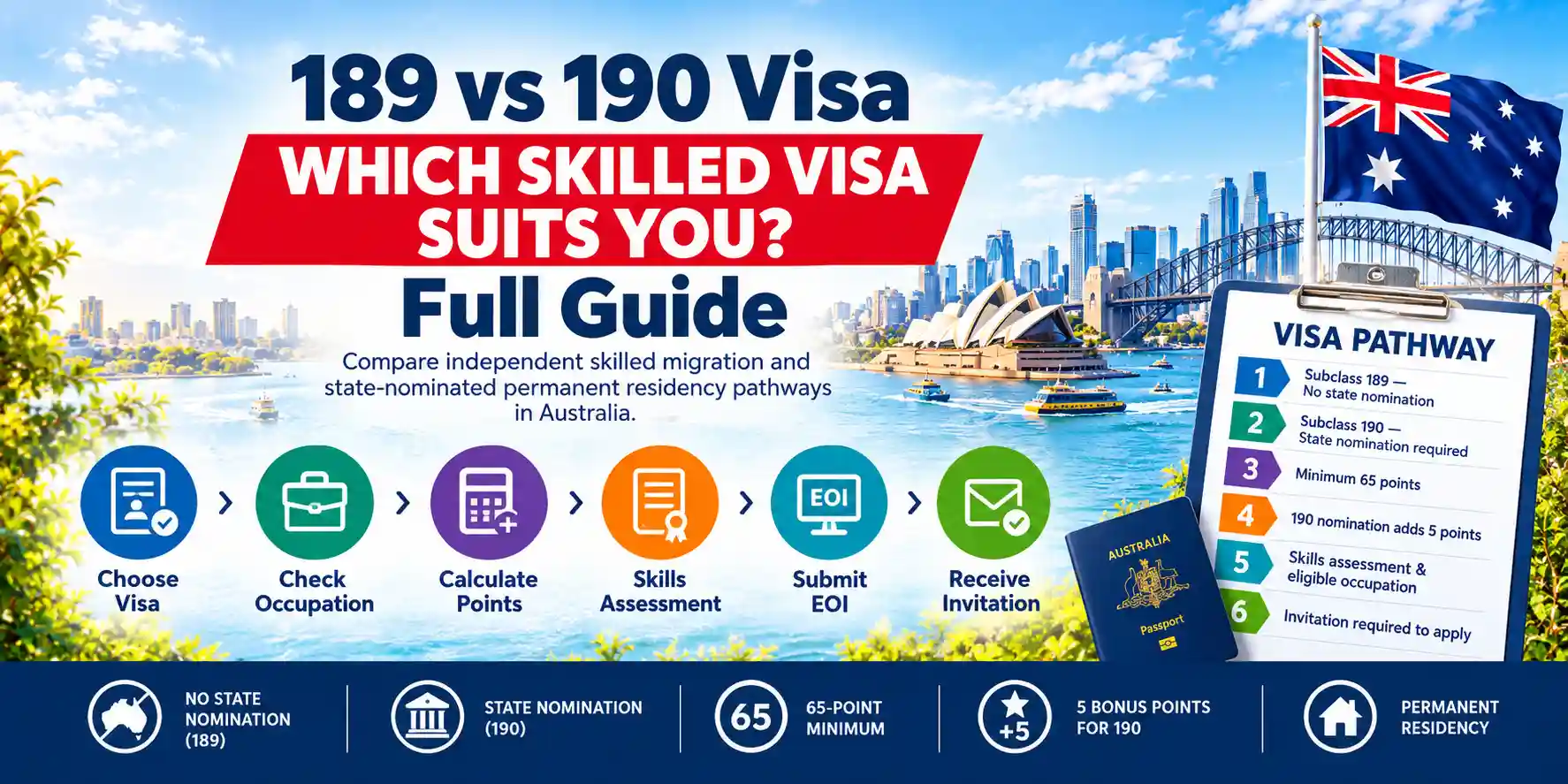
Difference Between 189 and 190 Visa: Which Skilled Visa Suits You?
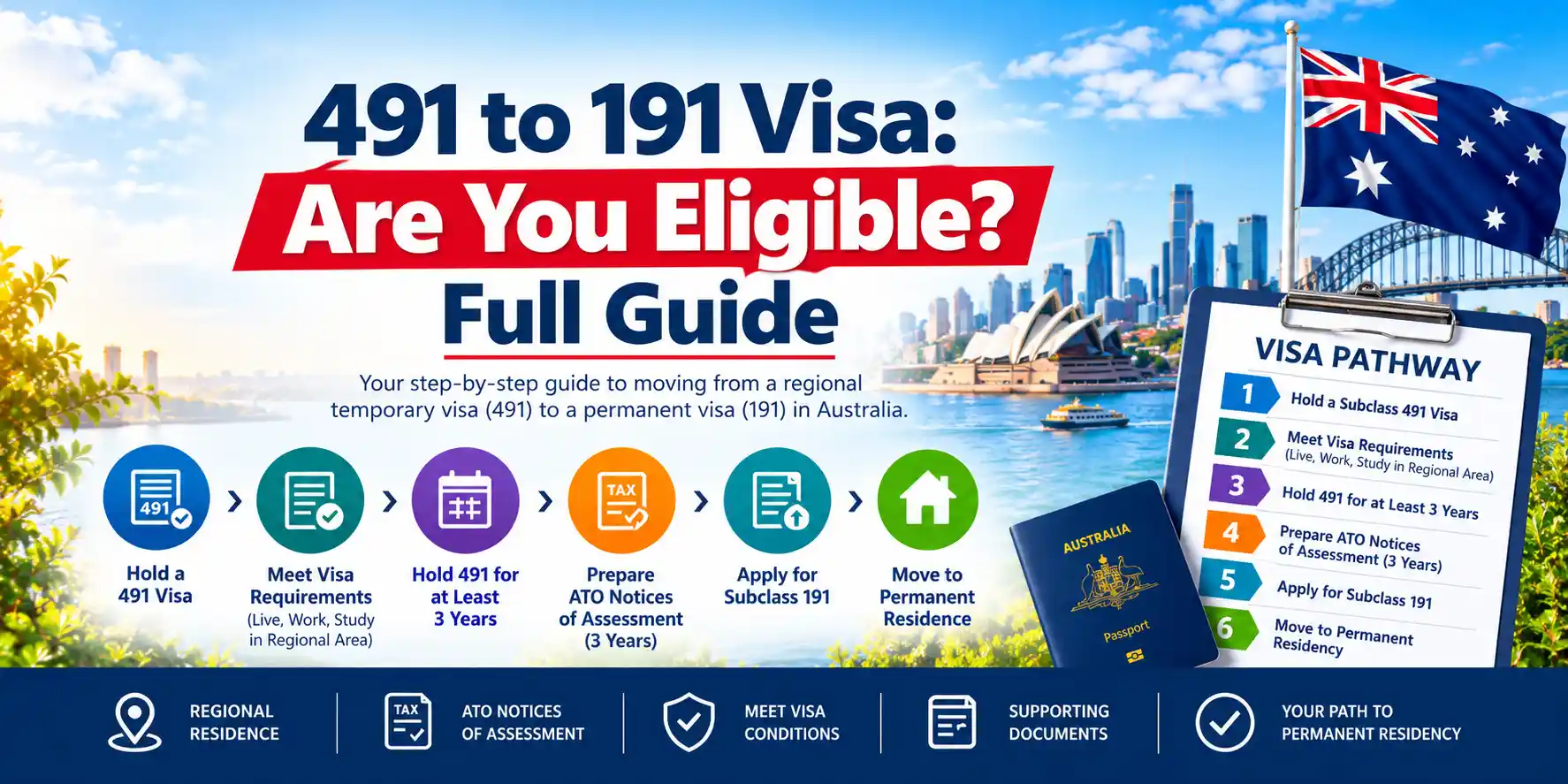
491 to 191 Visa: Are You Eligible? Full Guide
Conclusion
The Subclass 482 Skills in Demand visa is a temporary employer-sponsored visa for skilled applicants who want to work in Australia. On the other hand, subclass 186 Employer Nomination Scheme visa provides you with a pathway to permanent residency. The differences between 482 visa and 186 Visa will be helpful in making a selection for the type of visa to apply for based on qualifications and long-term migration plans. It should be noted here that the Australian visa criteria may change at any time, and hence, one must keep up with the latest guidelines before applying for a visa.
At Achievement Education and Visa Services, one of the Best Student Visa & Migration Consultants in Sydney, we can assist you in learning about the requirements of 482 and 186 visas. Contact Achievement Education and Visa Services today and talk to a well-known Nepali migration consultant in Australia.
FAQ on difference between 482 visa and a 186 Visa?
1. Can a 482 visa lead to permanent residency in Australia?
Yes. Persons holding 482 visas who are eligible may apply for a permanent residency visa through the Subclass 186 visa TRT pathway. Typically, persons applying under this pathway should have at least two years of eligible sponsored employment experience in Australia and be nominated by an eligible nominating party.
2. How long does it take to change from 482 visa to 186 visa?
Applicants typically require having at least two years of eligible sponsored employment before they are able to apply for this pathway. The additional period would depend on personal circumstances.
3. Is it possible to apply for 186 visa without 482 visa?
Yes, it is. Persons are able to apply for visa under the 186 Direct Entry pathway without being in possession of 482 visa, provided they meet all the requirements.
4. Is it possible to change employers on a 482 or 186 visa?
It is possible, but there is a difference between the two. A 482 visa requires that there be a new nominated and sponsoring employer when moving to a new job, while 186 visa holders have more flexible employment opportunities as permanent residents.